Conflicting rules
Understand what a recommendation is trying to solve, when it applies, and when another priority should come first.
Nutrition should make your next decision clearer, not give you another list of rules.
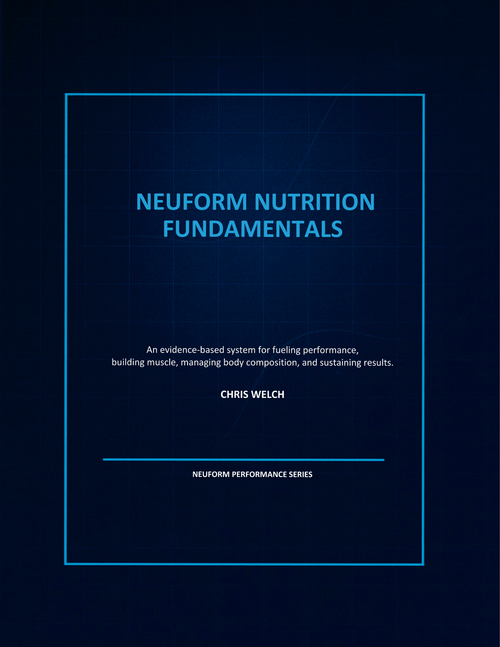
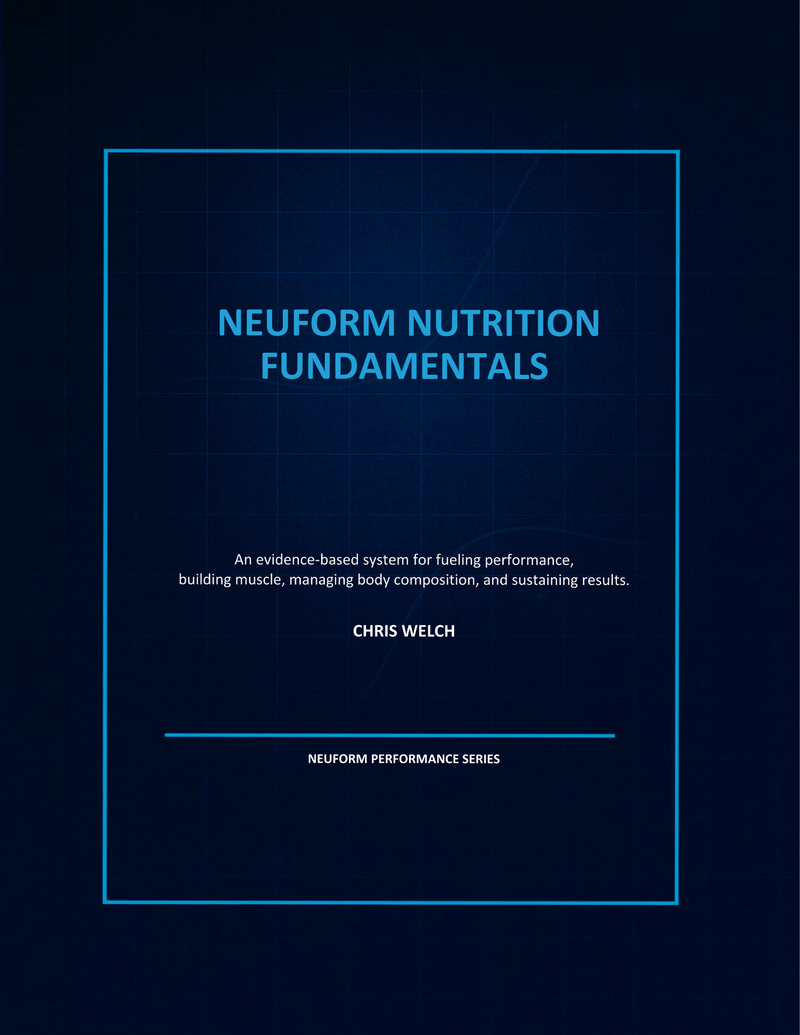
A practical, evidence-based system for setting nutrition targets, fueling training, building repeatable meals, and adjusting from real feedback.
Choose searchable digital access or a large-format physical copy. See sample pages.
Most nutrition advice gives you an isolated rule. This guide shows you how the decisions connect, how to choose a reasonable starting point, and how to adjust without rebuilding everything at once.
Understand what a recommendation is trying to solve, when it applies, and when another priority should come first.
Use calories, macros, hydration, and meal timing as testable starting points instead of treating an estimate like a verdict.
Build a structure that can survive travel, schedule changes, hard training, imperfect weeks, and changing goals.
Use the guide as a working system, not a list of rules. You do not need to read it cover to cover before using it. Start with the smallest useful decision, then add detail only when it improves the next step.
Estimate maintenance, choose a goal phase, and treat the first calorie target as a hypothesis to test rather than a verdict.
Set protein, carbohydrate, fat, fiber, hydration, and food-quality priorities in an order that keeps the full diet functional.
Use flexible 3-, 4-, or 5-meal structures, food swaps, and non-tracking options that can fit work, travel, culture, budget, and appetite.
Adjust meal timing, carbohydrate, fluids, and sodium to the actual session instead of forcing one universal pre- or post-workout rule.
Use trends in body weight, performance, recovery, hunger, digestion, and adherence to decide whether to hold, adjust, or gather better information first.
Recognize when general self-directed nutrition guidance is no longer enough and individualized clinical guidance should lead the decision.
The guide starts with energy balance, builds the full nutrition framework, then shows you how to review and adjust it in real life.
Estimate maintenance, choose the right goal phase, understand adaptation, and interpret progress without reacting to daily noise.
Set protein, carbohydrate, fat, fiber, and food-quality priorities in an order that keeps the full diet functional.
Build a hydration approach around training, climate, sweat loss, food intake, and the situations that require qualified guidance.
Turn targets into flexible meals, peri-workout nutrition, shopping defaults, restaurant choices, and travel-ready routines.
Review trends, troubleshoot hunger and recovery, reduce tracking burden when needed, and choose the next useful adjustment.
These are actual interior pages from the published 2026 edition. Open any preview to inspect the real layout, level of detail, tables, and decision tools before you buy.
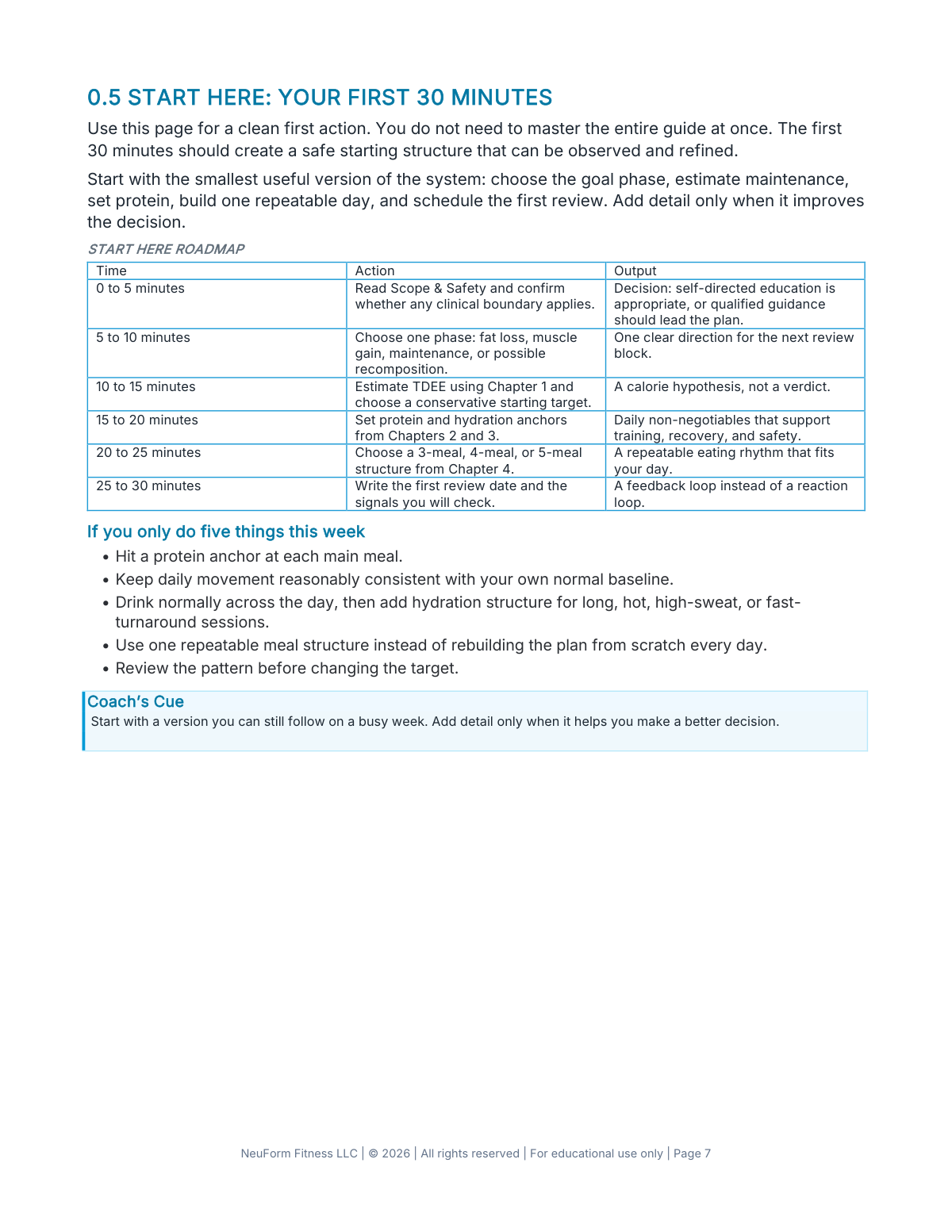
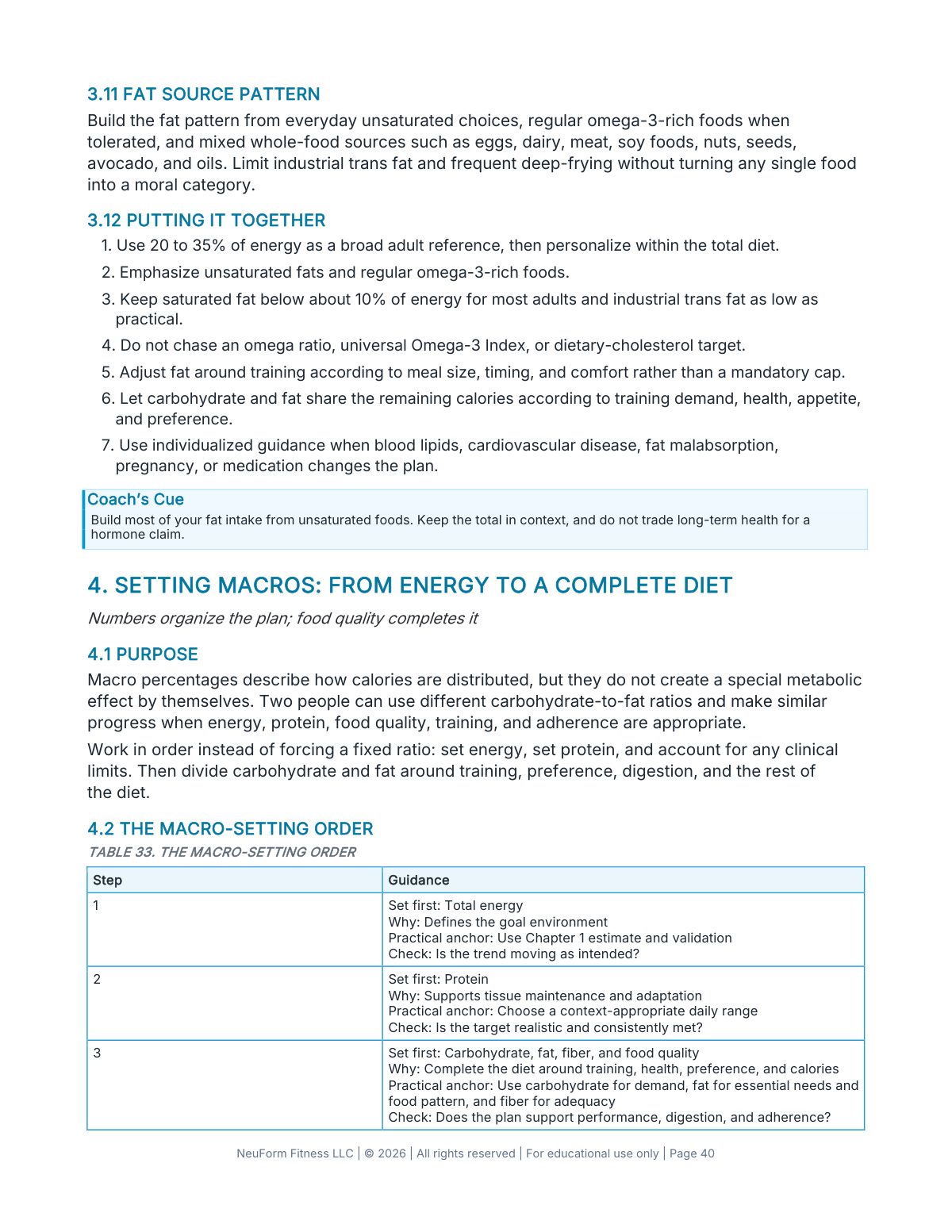
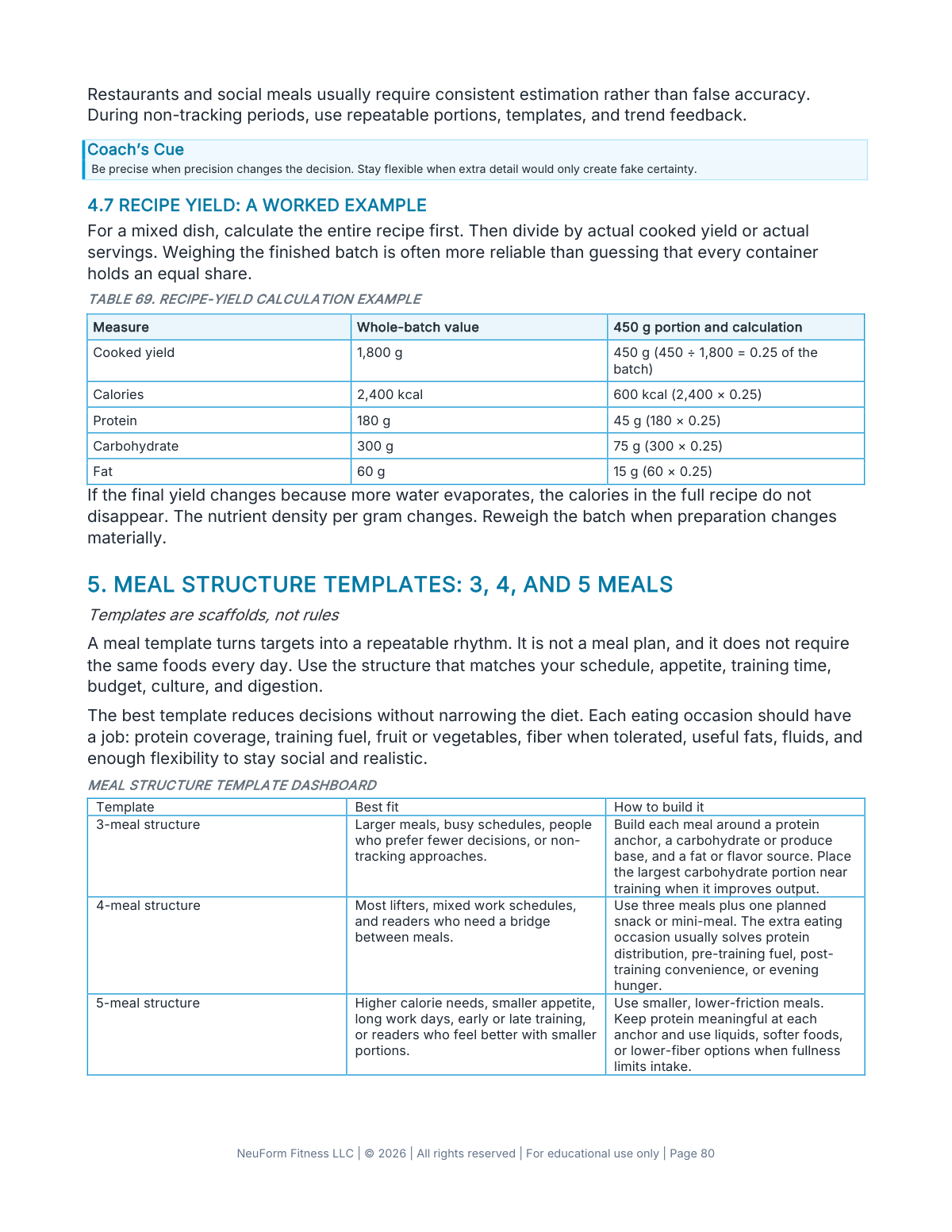

Use the same process whether the goal is fat loss, muscle gain, maintenance, performance, or a more consistent routine.
Clarify the goal, starting point, and any boundary that changes what is appropriate.
Turn the starting point into meals, targets, and routines that fit real life.
Watch performance, recovery, appetite, digestion, adherence, and meaningful trends.
Make the smallest change likely to solve the actual problem.
Make the system work with training, health, schedule, culture, preference, and budget.
Beginners can follow the guided sequence from the front. Experienced readers can use the same book as a reference for deeper context, tradeoffs, and troubleshooting. It remains practical education, not medical treatment or rigid dieting.
Important recommendations are explained with context, citations, and clear boundaries. The goal is to make the reasoning inspectable, not to turn every decision into a rigid rule.
The searchable Digital Edition is sold directly through NeuForm. The full-color paperback is sold and fulfilled through Amazon.
Best for fast searching and on-screen reference on a computer or tablet. Search a topic, jump directly to the relevant table or section, and return through My Library whenever you need it.
Personal-use access. Digital sales are final once access is provided, except where required by law. Terms apply.
Best for reading away from a screen, reviewing full-color tables, underlining key ideas, and keeping the guide beside your training or meal-planning setup.
Opens Amazon.com in a new tab. Sold and fulfilled through Amazon.
The Digital Edition is sold by NeuForm and accessed through My Library. The paperback is sold and fulfilled through Amazon.
I wrote this guide because nutrition gets buried under rules, trends, and half-truths. The goal is not to make every meal more complicated. It is to help you understand the system well enough to make a good decision, see what happens, and adjust without guessing.
Use what helps. Keep the method proportionate. Let qualified guidance take over when a medical condition, medication, life stage, or symptom changes the decision.
Chris Welch
Founder, NeuForm Fitness
No. The guide teaches you how to make nutrition decisions and includes flexible meal-structure examples. It does not lock you into one menu.
Yes. The opening roadmap gives you a clear place to start, while later chapters add enough depth for experienced trainees.
No. Training performance is an important use case, but the guide also supports body-composition goals, maintenance, everyday meal structure, and sustainable habits.
No. The guide explains calorie and macro tracking, but it also teaches non-tracking methods built around repeatable meals, portions, performance, and feedback.
Use or create a NeuForm account, complete checkout with that account, then open My Library → Books & Guides → Open Digital Edition. You will also receive an access email.
Refresh My Library before purchasing again. If the book is still missing, visit Support and include the email used at checkout and the approximate purchase date.
They contain the same core 2026 guide. The Digital Edition is optimized for search and on-screen reference, while the paperback is a large-format physical copy.
No. NeuForm Digital Edition access and Amazon paperback ownership are separate purchases.
Digital sales are final once access is provided, except where required by law. NeuForm will correct failed access, a corrupted file, or a duplicate charge when reported promptly. Review the Terms & Privacy page for the complete policy.
No. The standard purchase is for personal, single-user use. Coach, team, school, facility, or commercial distribution requires separate written permission from NeuForm.
Use the same practical framework in a searchable Digital Edition or a large-format full-color paperback.
Already purchased the Digital Edition? Open My Library.
Questions about access or your order? Visit Support.